

Chapter X
第十章
HE day passed much as the day before had done. Mrs. Hurst and Miss Bingley had spent some hours of the morning with the invalid, who continued, though slowly, to mend; and, in the evening, Elizabeth j…
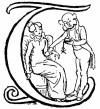 HE day passed much as the day before had done. Mrs. Hurst and Miss
Bingley had spent some hours of the morning with the invalid, who
continued, though slowly, to mend; and, in the evening, Elizabeth joined
their party in the drawing-room. The loo table, however, did not appear.
Mr. Darcy was writing, and Miss Bingley, seated near him, was watching
the progress of his letter, and repeatedly calling off his attention by
messages to his sister. Mr. Hurst and Mr. Bingley were at piquet, and
Mrs. Hurst was observing their game.
Elizabeth took up some needlework, and was sufficiently amused in attending to what passed between Darcy and his companion. The perpetual commendations of the lady either on his hand-writing, or on the evenness of his lines, or on the length of his letter, with the perfect unconcern with which her praises were received, formed a curious dialogue, and was exactly in unison with her opinion of each.
“How delighted Miss Darcy will be to receive such a letter!”
He made no answer.
“You write uncommonly fast.”
“You are mistaken. I write rather slowly.”
“How many letters you must have occasion to write in the course of a year! Letters of business, too! How odious I should think them!”
“It is fortunate, then, that they fall to my lot instead of to yours.”
“Pray tell your sister that I long to see her.”
“I have already told her so once, by your desire.”
“I am afraid you do not like your pen. Let me mend it for you. I mend pens remarkably well.”
“Thank you—but I always mend my own.”
“How can you contrive to write so even?”
He was silent.
“Tell your sister I am delighted to hear of her improvement on the harp, and pray let her know that I am quite in raptures with her beautiful little design for a table, and I think it infinitely superior to Miss Grantley’s.”
“Will you give me leave to defer your raptures till I write again? At present I have not room to do them justice.”
“Oh, it is of no consequence. I shall see her in January. But do you always write such charming long letters to her, Mr. Darcy?”
“They are generally long; but whether always charming, it is not for me to determine.”
“It is a rule with me, that a person who can write a long letter with ease cannot write ill.”
“That will not do for a compliment to Darcy, Caroline,” cried her brother, “because he does not write with ease. He studies too much for words of four syllables. Do not you, Darcy?”
“My style of writing is very different from yours.”
“Oh,” cried Miss Bingley, “Charles writes in the most careless way imaginable. He leaves out half his words, and blots the rest.”
“My ideas flow so rapidly that I have not time to express them; by which means my letters sometimes convey no ideas at all to my correspondents.”
“Your humility, Mr. Bingley,” said Elizabeth, “must disarm reproof.”
“Nothing is more deceitful,” said Darcy, “than the appearance of humility. It is often only carelessness of opinion, and sometimes an indirect boast.”
“And which of the two do you call my little recent piece of modesty?”
“The indirect boast; for you are really proud of your defects in writing, because you consider them as proceeding from a rapidity of thought and carelessness of execution, which, if not estimable, you think at least highly interesting. The power of doing anything with quickness is always much prized by the possessor, and often without any attention to the imperfection of the performance. When you told Mrs. Bennet this morning, that if you ever resolved on quitting Netherfield you should be gone in five minutes, you meant it to be a sort of panegyric, of compliment to yourself; and yet what is there so very laudable in a precipitance which must leave very necessary business undone, and can be of no real advantage to yourself or anyone else?”
“Nay,” cried Bingley, “this is too much, to remember at night all the foolish things that were said in the morning. And yet, upon my honour, I believed what I said of myself to be true, and I believe it at this moment. At least, therefore, I did not assume the character of needless precipitance merely to show off before the ladies.”
“I daresay you believed it; but I am by no means convinced that you would be gone with such celerity. Your conduct would be quite as dependent on chance as that of any man I know; and if, as you were mounting your horse, a friend were to say, ‘Bingley, you had better stay till next week,’ you would probably do it—you would probably not go—and, at another word, might stay a month.”
“You have only proved by this,” cried Elizabeth, “that Mr. Bingley did not do justice to his own disposition. You have shown him off now much more than he did himself.”
“I am exceedingly gratified,” said Bingley, “by your converting what my friend says into a compliment on the sweetness of my temper. But I am afraid you are giving it a turn which that gentleman did by no means intend; for he would certainly think the better of me if, under such a circumstance, I were to give a flat denial, and ride off as fast as I could.”
“Would Mr. Darcy then consider the rashness of your original intention as atoned for by your obstinacy in adhering to it?”
“Upon my word, I cannot exactly explain the matter—Darcy must speak for himself.”
“You expect me to account for opinions which you choose to call mine, but which I have never acknowledged. Allowing the case, however, to stand according to your representation, you must remember, Miss Bennet, that the friend who is supposed to desire his return to the house, and the delay of his plan, has merely desired it, asked it without offering one argument in favour of its propriety.”
“To yield readily—easily—to the persuasion of a friend is no merit with you.”
“To yield without conviction is no compliment to the understanding of either.”
“You appear to me, Mr. Darcy, to allow nothing for the influence of friendship and affection. A regard for the requester would often make one readily yield to a request, without waiting for arguments to reason one into it. I am not particularly speaking of such a case as you have supposed about Mr. Bingley. We may as well wait, perhaps, till the circumstance occurs, before we discuss the discretion of his behaviour thereupon. But in general and ordinary cases, between friend and friend, where one of them is desired by the other to change a resolution of no very great moment, should you think ill of that person for complying with the desire, without waiting to be argued into it?”
“Will it not be advisable, before we proceed on this subject, to arrange with rather more precision the degree of importance which is to appertain to this request, as well as the degree of intimacy subsisting between the parties?”
“By all means,” cried Bingley; “let us hear all the particulars, not forgetting their comparative height and size, for that will have more weight in the argument, Miss Bennet, than you may be aware of. I assure you that if Darcy were not such a great tall fellow, in comparison with myself, I should not pay him half so much deference. I declare I do not know a more awful object than Darcy on particular occasions, and in particular places; at his own house especially, and of a Sunday evening, when he has nothing to do.”
Mr. Darcy smiled; but Elizabeth thought she could perceive that he was rather offended, and therefore checked her laugh. Miss Bingley warmly resented the indignity he had received, in an expostulation with her brother for talking such nonsense.
“I see your design, Bingley,” said his friend. “You dislike an argument, and want to silence this.”
“Perhaps I do. Arguments are too much like disputes. If you and Miss Bennet will defer yours till I am out of the room, I shall be very thankful; and then you may say whatever you like of me.”
“What you ask,” said Elizabeth, “is no sacrifice on my side; and Mr. Darcy had much better finish his letter.”
Mr. Darcy took her advice, and did finish his letter.
When that business was over, he applied to Miss Bingley and Elizabeth for the indulgence of some music. Miss Bingley moved with alacrity to the pianoforte, and after a polite request that Elizabeth would lead the way, which the other as politely and more earnestly negatived, she seated herself.
Mrs. Hurst sang with her sister; and while they were thus employed, Elizabeth could not help observing, as she turned over some music-books that lay on the instrument, how frequently Mr. Darcy’s eyes were fixed on her. She hardly knew how to suppose that she could be an object of admiration to so great a man, and yet that he should look at her because he disliked her was still more strange. She could only imagine, however, at last, that she drew his notice because there was something about her more wrong and reprehensible, according to his ideas of right, than in any other person present. The supposition did not pain her. She liked him too little to care for his approbation.
After playing some Italian songs, Miss Bingley varied the charm by a lively Scotch air; and soon afterwards Mr. Darcy, drawing near Elizabeth, said to her,—
“Do you not feel a great inclination, Miss Bennet, to seize such an opportunity of dancing a reel?”
She smiled, but made no answer. He repeated the question, with some surprise at her silence.
“Oh,” said she, “I heard you before; but I could not immediately determine what to say in reply. You wanted me, I know, to say ‘Yes,’ that you might have the pleasure of despising my taste; but I always delight in overthrowing those kind of schemes, and cheating a person of their premeditated contempt. I have, therefore, made up my mind to tell you that I do not want to dance a reel at all; and now despise me if you dare.”
“Indeed I do not dare.”
Elizabeth, having rather expected to affront him, was amazed at his gallantry; but there was a mixture of sweetness and archness in her manner which made it difficult for her to affront anybody, and Darcy had never been so bewitched by any woman as he was by her. He really believed that, were it not for the inferiority of her connections, he should be in some danger.
Miss Bingley saw, or suspected, enough to be jealous; and her great anxiety for the recovery of her dear friend Jane received some assistance from her desire of getting rid of Elizabeth.
She often tried to provoke Darcy into disliking her guest, by talking of their supposed marriage, and planning his happiness in such an alliance.
“I hope,” said she, as they were walking together in the shrubbery the next day, “you will give your mother-in-law a few hints, when this desirable event takes place, as to the advantage of holding her tongue; and if you can compass it, to cure the younger girls of running after the officers. And, if I may mention so delicate a subject, endeavour to check that little something, bordering on conceit and impertinence, which your lady possesses.”
“No, no; stay where you are”
[Copyright 1894 by George Allen.]
“Have you anything else to propose for my domestic felicity?”
“Oh yes. Do let the portraits of your uncle and aunt Philips be placed in the gallery at Pemberley. Put them next to your great-uncle the judge. They are in the same profession, you know, only in different lines. As for your Elizabeth’s picture, you must not attempt to have it taken, for what painter could do justice to those beautiful eyes?”
“It would not be easy, indeed, to catch their expression; but their colour and shape, and the eyelashes, so remarkably fine, might be copied.”
At that moment they were met from another walk by Mrs. Hurst and Elizabeth herself.
“I did not know that you intended to walk,” said Miss Bingley, in some confusion, lest they had been overheard.
“You used us abominably ill,” answered Mrs. Hurst, “running away without telling us that you were coming out.”
Then taking the disengaged arm of Mr. Darcy, she left Elizabeth to walk by herself. The path just admitted three. Mr. Darcy felt their rudeness, and immediately said,—
“This walk is not wide enough for our party. We had better go into the avenue.”
But Elizabeth, who had not the least inclination to remain with them, laughingly answered,—
“No, no; stay where you are. You are charmingly grouped, and appear to uncommon advantage. The picturesque would be spoilt by admitting a fourth. Good-bye.”
She then ran gaily off, rejoicing, as she rambled about, in the hope of being at home again in a day or two. Jane was already so much recovered as to intend leaving her room for a couple of hours that evening.
中文翻译(全文)
这一天的光景和前一天差不多。赫斯特太太和宾利小姐上午陪了病人几个钟头,病人虽然好得缓慢,却仍在渐渐复原;到了晚上,伊丽莎白也到客厅里加入了她们一伙。只是卢牌桌并没有摆出来。达西先生在写信,宾利小姐坐在他近旁,看他写到哪儿了,还时不时地拿些问候她妹妹的话打断他的思路。赫斯特先生和宾利先生在下皮克牌,赫斯特太太在一旁观局。
伊丽莎白拿起针线活来做,一面留意达西和他那位同伴之间的动静,倒也觉得相当有趣。那位小姐不住口地称赞——一会儿夸他的字写得好,一会儿夸他的行款齐整,一会儿又夸他的信写得长——而他听这些恭维时那副全然无动于衷的样子,凑成了一场古怪的对话,也恰好印证了她对这两个人的看法。
“达西小姐收到这样一封信,该多高兴啊!”
他没有答话。
“您写得快极了。”
“您说错了。我写得相当慢。”
“一年里头,您得写多少封信啊!还有那些谈生意的信!要我写,我一定觉得讨厌死了!”
“那么,幸好这些信落到我头上,而不是落到您头上。”
“请告诉令妹,我极想见她。”
“我已经按您的意思告诉过她一次了。”
“恐怕您是不喜欢您这支笔吧。让我替您修一修。我修笔可是一把好手。”
“谢谢——不过我的笔一向自己修。”
“您怎么有本事把字写得这么齐整?”
他沉默不语。
“请告诉令妹,听说她的竖琴大有长进,我很高兴;还要请她知道,她画的那个小桌子图样漂亮极了,我简直欢喜得不得了,觉得它比格兰特利小姐的强了不知多少。”
“您允许我把您这一片倾倒留到下次写信时再说吗?眼下这信上实在没有余地,容不下这么些话。”
“哦,那倒不打紧。我一月里就能见到她。不过,达西先生,您给她写的信总是这么又长又迷人吗?”
“信通常都写得长;至于是否总那么迷人,那就不是我所能断定的了。”
“我有个定见:一个人若是能轻轻松松写一封长信,他的文章就坏不到哪里去。”
“卡罗琳,这话拿来恭维达西可不成,”她哥哥嚷道,“因为他写起信来并不轻松。他太爱琢磨那些四个音节的字眼了。可不是吗,达西?”
“我的写法跟你的大不相同。”
“哦,”宾利小姐嚷道,“查尔斯写起来随便得不能再随便了。一半的字漏掉,剩下的又涂得乱七八糟。”
“我的念头来得太快,来不及写下来;因此我的信有时根本没给收信人送去什么念头。”
“宾利先生,”伊丽莎白说,“您这份谦逊,叫人都不好意思责备您了。”
“再没有比谦逊的样子更骗人的了,”达西说,“它往往只是不把心思当回事,有时还是一种拐弯抹角的自我夸耀。”
“那么,我方才那一小段自谦之词,您算它是哪一种呢?”
“拐弯抹角的自我夸耀;因为您其实为自己的书写毛病感到得意,您认为那是心思敏捷、落笔不拘的结果——即便算不得长处,您也觉得至少很有意思。一个人做事快捷的本事,自己总是看得很重,往往并不理会做成什么样。您今早对班纳特太太说,您若哪天决定离开尼日斐花园,五分钟之内就能走;您说这话,本意是自夸一番,替自己说句好话。可是这种急躁有什么值得称道的呢?它必定会把十分要紧的事情撇下不管,对您自己或对别人都不会有真正的好处。”
“得了吧,”宾利嚷道,“把早上说的傻话到了晚上还记得这么清楚,也太过了。不过,凭良心说,我当时讲自己的那些话,我确实认为是真的,此刻也还这么认为。所以,我至少不是只为了在小姐们面前显摆,才装出这么一副不必要的急躁性子。”
“我信您是这么想的;可我绝不相信您真会走得那么利索。您的行事跟别人的一样,全靠碰巧;假如您正要上马,有个朋友说:‘宾利,你还是待到下星期吧。’您多半就留下了——多半就不走了——再多说一句,说不定就能待上一个月。”
“您这番话只证明了一件事,”伊丽莎白嚷道,“宾利先生没有把他自己的性情说透。您刚才替他标榜的,倒比他替自己标榜的多得多。”
“您把我朋友的话解释成对我脾气温和的称赞,”宾利说,“我真是感激不尽。不过我怕您这层意思,那位先生本意里一点儿也没有;因为假如我在那种情形下断然否认,随即催马疾驰而去,他一定会觉得我更有出息。”
“那么,达西先生就会认为,您原本的鲁莽,因为您固执地照办而将功补过了吗?”
“说真的,这件事我解释不清——还是让达西自己说吧。”
“您要我把一些您硬说成是我的看法解释清楚,可那些看法我从来没有承认过。不过,就算事情照您说的那样,班纳特小姐,您也该记得,那位据说希望他回屋里去、把计划往后推的朋友,也不过是表示了一下愿望,提了一句请求,并没有举出一条理由来说明这样做有何妥当之处。”
“毫不迟疑——轻轻松松地听从朋友的劝告,在您看来算不得什么长处。”
“未经信服就顺从,对哪一方的见识都算不上恭维。”
“达西先生,在我看来,您一点儿也不承认友情和感情的分量。对提出请求的人存着一份情意,往往就会让人立刻答应下来,用不着等别人讲一番道理把他说服。我并不是专指您假想的宾利先生那种情形。他届时怎样做才算得当,我们也许还是等事情真的发生了再谈为好。可是在一般寻常的情形里,朋友之间,一方请另一方改变一个并不十分要紧的决定,您难道会因为那人没有等着别人讲道理来说服、径直照办,就把他看轻吗?”
“在我们继续讨论这个问题之前,是不是先把这项请求究竟有多要紧、以及双方交情到底有多深,比较精确地规定一下,更为妥当?”
“当然可以,”宾利嚷道,“咱们就把细情都摆出来,别忘了比较一下他们各自的高矮胖瘦,班纳特小姐,这在辩论里的分量,恐怕比您想的还重。我可以告诉您,要是达西不是这么个高个子,跟我一比显得这么出众,我对他才不会这么恭敬呢。我敢说,在某些场合、某些地方,再没有比达西更吓人的了;尤其是在他自己家里,在星期日的晚上,他百无聊赖的时候。”
达西先生笑了笑;可伊丽莎白觉得看得出他有些恼了,便忍住了笑。宾利小姐见他有失体面,愤愤不平,责怪她哥哥不该说这种胡话。
“我看穿你的用意了,宾利,”他的朋友说,“你不喜欢争辩,想把这番争论压下去。”
“也许是吧。争论太像吵架了。您和班纳特小姐要是肯把你们这场争论推迟到我出了这间屋子以后再继续,我就感激不尽了;到那时,你们爱怎么说我就怎么说。”
“您这个请求,”伊丽莎白说,“对我算不得牺牲;达西先生还是把信写完的好。”
达西先生听从了她的劝告,果然把信写完了。
这件事一了,他便请宾利小姐和伊丽莎白赏脸弹些曲子。宾利小姐立刻轻快地走到钢琴前,先客气地请伊丽莎白先弹,伊丽莎白也同样客气、却更恳切地推辞了,她这才坐下来。
赫斯特太太跟着她妹妹一同唱;她们正忙着,伊丽莎白翻着琴上放着的几本乐谱,不由得注意到达西先生的目光屡屡落在她身上。她几乎无法设想,自己这样的人竟会成为这么一位人物的爱慕对象;然而,他若是因为讨厌她才看她,那就更奇怪了。到最后,她只能这样想:他之所以留意她,是因为按他的是非标准,她身上总有什么地方比在座的任何人都更不对、更该受责备。这个猜测并没有叫她难过。她对他喜欢得太少,并不在乎他是否赞许。
弹了几支意大利歌曲之后,宾利小姐换了一支活泼的苏格兰小调,别添一番情趣;不多时,达西先生走近伊丽莎白,对她说——
“班纳特小姐,您难道不想抓住这个机会跳一支里尔舞吗?”
她笑了笑,没有回答。他对她的沉默有些诧异,又问了一遍。
“哦,”她说,“您方才的话我听见了;只是一时拿不定该怎么回答。我知道,您是想让我说一声‘想’,好让您有资格看轻我的品味;可我一向最喜欢拆穿这类算计,叫人家准备好的那点轻蔑落个空。所以,我已经打定主意告诉您:我一点儿也不想跳里尔舞。现在,您要是有胆量,就看轻我吧。”
“我确实不敢。”
伊丽莎白本以为会惹恼他,见他这样殷勤,倒吃了一惊;不过她的神态里既有甜美,又带几分俏皮,实在很难得罪什么人;而达西也从未像这样被哪个女人迷住过。他当真以为,若不是她的亲戚门户太低,自己怕是要陷入危险了。
宾利小姐看出了一些,或者猜到了一些,已经足够叫她妒忌了;她本来极其盼望亲爱的简早日康复,如今又多了一层想打发伊丽莎白走的心思,这份盼望便格外殷切。
她时常提起他们那桩假想的婚事,为达西这样一门亲事筹划幸福,想借此挑得达西厌恶这位客人。
“我希望,”第二天他们一起在灌木林里散步时,她说,“等这件称心如意的事成了,您能给您那位岳母稍加指点,让她明白少开口的好处;要是办得到,还得治一治几个小妹妹追着军官跑的毛病。还有,如果我可以提这么一件微妙的事——请您费心管一管您那位小姐身上那点近乎自负和无礼的小毛病。”
“不,不;你就待在原处吧。”
[版权所有 1894 年,乔治·艾伦。]
“为了我的家庭幸福,您还有什么别的建议吗?”
“哦,有的。请把您姨妈和姨父菲利普斯夫妇的画像挂到彭伯利的长廊里去,就挂在您那位当法官的叔祖父旁边。您知道,他们干的是同一行,只是路数不同罢了。至于您那位伊丽莎白的画像,您可千万别找人去画,有哪个画师画得出她那双美丽的眼睛呢?”
“要画出那眼神,确实不容易;不过眼睛的颜色和形状,还有那异常秀美的睫毛,倒是可以临摹下来的。”
正在这时,赫斯特太太和伊丽莎白本人从另一条小径上迎面走来。
“我不知道你们也打算出来散步,”宾利小姐说,有些慌乱,生怕方才的话被人听见。
“你们太不像话了,”赫斯特太太答道,“自己溜出来,也不告诉我们一声。”
说着,她挽起达西先生空着的那条胳膊,让伊丽莎白一个人走。这条小径恰好只容三个人并肩。达西先生觉得她们太失礼,立刻说道——
“这条路容不下我们几个人。我们不如到大路上去吧。”
可是伊丽莎白一点也不愿意跟他们待在一处,便笑着答道——
“不,不,你们就待在这儿吧。你们这样站成一组,好看极了,姿态再相宜不过。若再加上第四个人,这幅画就毁了。再见。”
说罢,她轻快地跑开了,一路闲逛,心里欢喜,只盼着一两天内就能回家。简已经好得多了,那天晚上就打算出房门待上两个钟头。
评论
0 条讨论
登录后发表评论
立即登录暂无评论
成为第一个分享想法的人吧!