

Chapter LV
第五十五章
FEW days after this visit, Mr. Bingley called again, and alone. His friend had left him that morning for London, but was to return home in ten days’ time. He sat with them above an hour, and was in re…
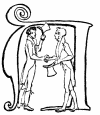 FEW days after this visit, Mr. Bingley called again, and alone. His
friend had left him that morning for London, but was to return home in
ten days’ time. He sat with them above an hour, and was in remarkably
good spirits. Mrs. Bennet invited him to dine with them; but, with many
expressions of concern, he confessed himself engaged elsewhere.
“Next time you call,” said she, “I hope we shall be more lucky.”
He should be particularly happy at any time, etc., etc.; and if she would give him leave, would take an early opportunity of waiting on them.
“Can you come to-morrow?”
Yes, he had no engagement at all for to-morrow; and her invitation was accepted with alacrity.
He came, and in such very good time, that the ladies were none of them dressed. In ran Mrs. Bennet to her daughters’ room, in her dressing-gown, and with her hair half finished, crying out,—
“My dear Jane, make haste and hurry down. He is come—Mr. Bingley is come. He is, indeed. Make haste, make haste. Here, Sarah, come to Miss Bennet this moment, and help her on with her gown. Never mind Miss Lizzy’s hair.”
“We will be down as soon as we can,” said Jane; “but I dare say Kitty is forwarder than either of us, for she went upstairs half an hour ago.”
“Oh! hang Kitty! what has she to do with it? Come, be quick, be quick! where is your sash, my dear?”
But when her mother was gone, Jane would not be prevailed on to go down without one of her sisters.
The same anxiety to get them by themselves was visible again in the evening. After tea, Mr. Bennet retired to the library, as was his custom, and Mary went upstairs to her instrument. Two obstacles of the five being thus removed, Mrs. Bennet sat looking and winking at Elizabeth and Catherine for a considerable time, without making any impression on them. Elizabeth would not observe her; and when at last Kitty did, she very innocently said, “What is the matter, mamma? What do you keep winking at me for? What am I to do?”
“Nothing, child, nothing. I did not wink at you.” She then sat still five minutes longer; but unable to waste such a precious occasion, she suddenly got up, and saying to Kitty,—
“Come here, my love, I want to speak to you,” took her out of the room. Jane instantly gave a look at Elizabeth which spoke her distress at such premeditation, and her entreaty that she would not give in to it. In a few minutes, Mrs. Bennet half opened the door and called out,—
“Lizzy, my dear, I want to speak with you.”
Elizabeth was forced to go.
“We may as well leave them by themselves, you know,” said her mother as soon as she was in the hall. “Kitty and I are going upstairs to sit in my dressing-room.”
Elizabeth made no attempt to reason with her mother, but remained quietly in the hall till she and Kitty were out of sight, then returned into the drawing-room.
Mrs. Bennet’s schemes for this day were ineffectual. Bingley was everything that was charming, except the professed lover of her daughter. His ease and cheerfulness rendered him a most agreeable addition to their evening party; and he bore with the ill-judged officiousness of the mother, and heard all her silly remarks with a forbearance and command of countenance particularly grateful to the daughter.
He scarcely needed an invitation to stay supper; and before he went away an engagement was formed, chiefly through his own and Mrs. Bennet’s means, for his coming next morning to shoot with her husband.
After this day, Jane said no more of her indifference. Not a word passed between the sisters concerning Bingley; but Elizabeth went to bed in the happy belief that all must speedily be concluded, unless Mr. Darcy returned within the stated time. Seriously, however, she felt tolerably persuaded that all this must have taken place with that gentleman’s concurrence.
Bingley was punctual to his appointment; and he and Mr. Bennet spent the morning together, as had been agreed on. The latter was much more agreeable than his companion expected. There was nothing of presumption or folly in Bingley that could provoke his ridicule, or disgust him into silence; and he was more communicative, and less eccentric, than the other had ever seen him. Bingley of course returned with him to dinner; and in the evening Mrs. Bennet’s invention was again at work to get everybody away from him and her daughter. Elizabeth, who had a letter to write, went into the breakfast-room for that purpose soon after tea; for as the others were all going to sit down to cards, she could not be wanted to counteract her mother’s schemes.
But on her returning to the drawing-room, when her letter was finished, she saw, to her infinite surprise, there was reason to fear that her mother had been too ingenious for her. On opening the door, she perceived her sister and Bingley standing together over the hearth, as if engaged in earnest conversation; and had this led to no suspicion, the faces of both, as they hastily turned round and moved away from each other, would have told it all. Their situation was awkward enough; but hers she thought was still worse. Not a syllable was uttered by either; and Elizabeth was on the point of going away again, when Bingley, who as well as the other had sat down, suddenly rose, and, whispering a few words to her sister, ran out of the room.
Jane could have no reserves from Elizabeth, where confidence would give pleasure; and, instantly embracing her, acknowledged, with the liveliest emotion, that she was the happiest creature in the world.
“’Tis too much!” she added, “by far too much. I do not deserve it. Oh, why is not everybody as happy?”
Elizabeth’s congratulations were given with a sincerity, a warmth, a delight, which words could but poorly express. Every sentence of kindness was a fresh source of happiness to Jane. But she would not allow herself to stay with her sister, or say half that remained to be said, for the present.
“I must go instantly to my mother,” she cried. “I would not on any account trifle with her affectionate solicitude, or allow her to hear it from anyone but myself. He is gone to my father already. Oh, Lizzy, to know that what I have to relate will give such pleasure to all my dear family! how shall I bear so much happiness?”
She then hastened away to her mother, who had purposely broken up the card-party, and was sitting upstairs with Kitty.
Elizabeth, who was left by herself, now smiled at the rapidity and ease with which an affair was finally settled, that had given them so many previous months of suspense and vexation.
“And this,” said she, “is the end of all his friend’s anxious circumspection! of all his sister’s falsehood and contrivance! the happiest, wisest, and most reasonable end!”
In a few minutes she was joined by Bingley, whose conference with her father had been short and to the purpose.
“Where is your sister?” said he hastily, as he opened the door.
“With my mother upstairs. She will be down in a moment, I dare say.”
He then shut the door, and, coming up to her, claimed the good wishes and affection of a sister. Elizabeth honestly and heartily expressed her delight in the prospect of their relationship. They shook hands with great cordiality; and then, till her sister came down, she had to listen to all he had to say of his own happiness, and of Jane’s perfections; and in spite of his being a lover, Elizabeth really believed all his expectations of felicity to be rationally founded, because they had for basis the excellent understanding and super-excellent disposition of Jane, and a general similarity of feeling and taste between her and himself.
It was an evening of no common delight to them all; the satisfaction of Miss Bennet’s mind gave such a glow of sweet animation to her face, as made her look handsomer than ever. Kitty simpered and smiled, and hoped her turn was coming soon. Mrs. Bennet could not give her consent, or speak her approbation in terms warm enough to satisfy her feelings, though she talked to Bingley of nothing else, for half an hour; and when Mr. Bennet joined them at supper, his voice and manner plainly showed how really happy he was.
Not a word, however, passed his lips in allusion to it, till their visitor took his leave for the night; but as soon as he was gone, he turned to his daughter and said,—
“Jane, I congratulate you. You will be a very happy woman.”
Jane went to him instantly, kissed him, and thanked him for his goodness.
“You are a good girl,” he replied, “and I have great pleasure in thinking you will be so happily settled. I have not a doubt of your doing very well together. Your tempers are by no means unlike. You are each of you so complying, that nothing will ever be resolved on; so easy, that every servant will cheat you; and so generous, that you will always exceed your income.”
“I hope not so. Imprudence or thoughtlessness in money matters would be unpardonable in me.”
“Exceed their income! My dear Mr. Bennet,” cried his wife, “what are you talking of? Why, he has four or five thousand a year, and very likely more.” Then addressing her daughter, “Oh, my dear, dear Jane, I am so happy! I am sure I shan’t get a wink of sleep all night. I knew how it would be. I always said it must be so, at last. I was sure you could not be so beautiful for nothing! I remember, as soon as ever I saw him, when he first came into Hertfordshire last year, I thought how likely it was that you should come together. Oh, he is the handsomest young man that ever was seen!”
Wickham, Lydia, were all forgotten. Jane was beyond competition her favourite child. At that moment she cared for no other. Her younger sisters soon began to make interest with her for objects of happiness which she might in future be able to dispense.
Mary petitioned for the use of the library at Netherfield; and Kitty begged very hard for a few balls there every winter.
Bingley, from this time, was of course a daily visitor at Longbourn; coming frequently before breakfast, and always remaining till after supper; unless when some barbarous neighbour, who could not be enough detested, had given him an invitation to dinner, which he thought himself obliged to accept.
Elizabeth had now but little time for conversation with her sister; for while he was present Jane had no attention to bestow on anyone else: but she found herself considerably useful to both of them, in those hours of separation that must sometimes occur. In the absence of Jane, he always attached himself to Elizabeth for the pleasure of talking of her; and when Bingley was gone, Jane constantly sought the same means of relief.
“He has made me so happy,” said she, one evening, “by telling me that he was totally ignorant of my being in town last spring! I had not believed it possible.”
“I suspected as much,” replied Elizabeth. “But how did he account for it?”
“It must have been his sisters’ doing. They were certainly no friends to his acquaintance with me, which I cannot wonder at, since he might have chosen so much more advantageously in many respects. But when they see, as I trust they will, that their brother is happy with me, they will learn to be contented, and we shall be on good terms again: though we can never be what we once were to each other.”
“That is the most unforgiving speech,” said Elizabeth, “that I ever heard you utter. Good girl! It would vex me, indeed, to see you again the dupe of Miss Bingley’s pretended regard.”
“Would you believe it, Lizzy, that when he went to town last November he really loved me, and nothing but a persuasion of my being indifferent would have prevented his coming down again?”
“He made a little mistake, to be sure; but it is to the credit of his modesty.”
This naturally introduced a panegyric from Jane on his diffidence, and the little value he put on his own good qualities.
Elizabeth was pleased to find that he had not betrayed the interference of his friend; for, though Jane had the most generous and forgiving heart in the world, she knew it was a circumstance which must prejudice her against him.
“I am certainly the most fortunate creature that ever existed!” cried Jane. “Oh, Lizzy, why am I thus singled from my family, and blessed above them all? If I could but see you as happy! If there were but such another man for you!”
“If you were to give me forty such men I never could be so happy as you. Till I have your disposition, your goodness, I never can have your happiness. No, no, let me shift for myself; and, perhaps, if I have very good luck, I may meet with another Mr. Collins in time.”
The situation of affairs in the Longbourn family could not be long a secret. Mrs. Bennet was privileged to whisper it to Mrs. Philips, and she ventured, without any permission, to do the same by all her neighbours in Meryton.
The Bennets were speedily pronounced to be the luckiest family in the world; though only a few weeks before, when Lydia had first run away, they had been generally proved to be marked out for misfortune.
中文翻译(全文)
这次拜访过后没几天,宾利先生又来登门,而且是独自一人。他的朋友那天早上已经离他去了伦敦,不过十天内就会回来。他坐着陪她们谈了一个多钟头,兴致格外好。班纳特太太请他留下来吃饭;他却连声道歉,说自己另有约在先。
“下次你来的时候,”她说,“但愿我们运气好一些。”
他说他无论什么时候来都格外高兴,诸如此类的话说了一大套;又说倘若她肯应允,他想早些再来拜望。
“你明天能来吗?”
能来,他明天全无约会;于是一口答应了她的邀请,十分爽快。
他来了,而且来得那么早,几位小姐都还没梳妆好。班纳特太太穿着晨衣、头发只梳了一半,就奔进女儿们的房间,大声嚷道——
“亲爱的简,快点儿,快点儿下去。他来了——宾利先生来了。真的来了。快点儿,快点儿。喂,萨拉,马上来伺候班纳特小姐,帮她把衣裳穿上。莉齐小姐的头发别管了。”
“我们尽快下去就是了,”简说,“不过我想基蒂总该比我们两个都快,她半小时前就上楼去了。”
“唉!管基蒂做什么!这跟她说得上吗?来,快点儿,快点儿!你的腰带呢,亲爱的?”
可是母亲一走,简怎么也不肯单独下楼,非要有个妹妹陪着才行。
到了晚上,她那番想撮合他们单独相处的急切心思又显了出来。喝过茶,班纳特先生照例躲进书房,玛丽上楼去弹琴。五个人里少了两个碍事的,班纳特太太便坐在那里,盯着伊丽莎白和凯瑟琳,又不住地眨眼示意,闹了好半天,两人却全无反应。伊丽莎白只当没看见;到最后基蒂总算看见了,便十分天真地问:“怎么了,妈妈?你老冲我眨眼做什么?要我做什么事吗?”
“没什么,孩子,没什么。我没冲你眨眼。”她又静静地坐了五分钟;可是这么宝贵的时机岂能白白放过,她忽然站起来,对基蒂说——
“过来,亲爱的,我有话跟你说。”说着便把她带出了房间。简立刻向伊丽莎白递了个眼色,那眼神里满是对母亲这番刻意安排的不安,也满是对她别顺着这意思的恳求。过了几分钟,班纳特太太把门推开一半,喊道——
“莉齐,亲爱的,我有话跟你说。”
伊丽莎白只得出去。
“你瞧,咱们索性让他们两个自己待着吧,”一到过道,母亲就说,“我和基蒂上楼到我梳妆间坐坐去。”
伊丽莎白并不打算跟母亲讲道理,只静静地站在过道里,等她和基蒂走得看不见了,才回到客厅去。
班纳特太太这一天的盘算全落了空。宾利先生处处讨人喜欢,只差没有公开承认是她女儿的求婚者。他举止从容、性情开朗,给他们晚上的聚会添了不少乐趣;他忍着那位母亲不明事理的殷勤,任她把那些傻话说尽,脸上始终不动声色——这份涵养,叫做女儿的格外感激。
他几乎不用人请,就留下来吃了晚饭;临走之前,又约定了第二天早上来陪她丈夫打猎——这主要是他自己和班纳特太太两下里促成的。
这一天之后,简再也不提自己无动于衷的话了。姐妹俩关于宾利先生一个字也没提;可是伊丽莎白上床时却怀着幸福的信念,认为这事很快就要有个了结——除非达西先生如期赶回来。不过说正经的,她倒颇相信,这一切必定是得到那位先生赞同的。
宾利先生准时赴约,同班纳特先生照约定的那样一起消磨了一个上午。后者远比他的同伴预想的要和蔼可亲。宾利身上没有半点自负或愚蠢会招他讥笑,或叫他厌恶得闭口不言;而他本人也比宾利以前见过的任何时候都更健谈、更少古怪。宾利自然随他回来吃饭;到了晚上,班纳特太太又挖空心思,要设法让别人都离开他跟她女儿。伊丽莎白有一封信要写,喝过茶不久就到早餐厅去了;因为其余的人都要坐下打牌,用不着她留在那里妨碍母亲的计划。
可是等她写完信回到客厅,却大吃一惊:她有理由担心,母亲的手段比她自己想的还要高明。她一推门,就看见姐姐和宾利并肩站在壁炉前,仿佛正谈得认真;即便这一点还不足以引起猜疑,两人慌忙转身分开时的那副脸色,也什么都说明了。他们的处境已经够尴尬,可伊丽莎白觉得自己的处境更糟。两人一句话也说不出来;伊丽莎白正要转身退出去,宾利——他刚才和简一样坐了下来——忽然站起身,凑到她姐姐耳边说了几句,便跑出了房间。
在伊丽莎白面前,简没有什么可隐瞒的,况且把心事说出来只会让她高兴;她立刻抱住妹妹,万分激动地承认自己是天底下最幸福的人。
“这太过了!”她接着说,“实在太过了。我不配。唉,为什么不是人人都像我这样幸福呢?”
伊丽莎白的道贺极其真诚、热烈、欢欣,语言实在难以表达其万一。简每听一句亲热话,就多一分快乐。可是她不肯再跟妹妹待下去,也不肯把剩下的话说上一半——至少眼下不行。
“我得马上到母亲那儿去,”她嚷道,“我怎么也不肯辜负她一片慈爱的关切,也不肯让她从别人嘴里听到这件事。他已经去父亲那儿了。哦,莉齐,一想到我要讲的这话会让全家人这么高兴,我简直受不住这么大的福气!”
说罢,她急忙到母亲那里去;母亲早已有意散了牌局,正跟基蒂坐在楼上。
剩下伊丽莎白一个人,她不禁笑了起来:这件事先前让他们牵肠挂肚、烦恼了好几个月,如今了结得竟这样快、这样顺当。
“这就是他朋友那番苦心谨慎的结果!”她说,“这就是他妹妹那些虚情假意、那些算计的结果!可这又是最幸福、最明智、最合情理的结局!”
过了几分钟,宾利也来了;他跟班纳特先生的谈话简短而切中要害。
“你姐姐呢?”他一推开门就急忙问道。
“在楼上跟母亲在一起。我想她马上就会下来。”
他随手关上门,走到她跟前,请求她以姐妹的情分给他祝福。伊丽莎白真心诚意地表示,很高兴他们将成一家人。两人极其亲热地握了手;随后,直到姐姐下楼来,她不得不听他把自己有多么幸福、简有多么完美的话说了一遍又一遍。尽管他是个热恋中人,伊丽莎白倒真觉得他对幸福的种种指望都建立在理性之上,因为那些指望的根基,是简出众的见识和格外温良的性情,以及两人在感情和趣味上的大体相投。
那天晚上,全家人都欢喜得不寻常。班纳特小姐心里那份满足,使她脸上泛起一层甜蜜的神采,看上去比任何时候都美。基蒂抿着嘴笑,只盼着轮到自己那一天快些来。班纳特太太满口称许,说了半个钟头也没说别的事,可无论怎样措辞,都觉得不够热切,不足表达自己的心意;班纳特先生吃晚饭时出来同他们聚在一处,他的语调和神情分明表露出他实在是高兴的。
不过,直到客人告辞回去,他嘴里没有吐过一个字提到这件事;可宾利一走,他就转过身来对女儿说——
“简,我恭喜你。你会是个非常幸福的女人。”
简立刻走到他跟前,吻了他,谢他这样疼她。
“你是个好孩子,”他答道,“想到你将来能这样美满地安顿下来,我非常高兴。我毫不怀疑你们会过得很好。你们的脾气一点也不像。你们两个都那么随和,什么事也定不下来;都那么松泛,哪个用人都会算计你们;都那么大方,花销总要超出进项。”
“我希望不至于如此。在钱财上若有不谨慎或不检点的地方,在我就是不可原谅的。”
“超出进项!亲爱的班纳特先生,”他太太嚷道,“你说的是什么话?哼,他一年有四千五千英镑,说不定还多呢。”接着又对女儿说:“哦,我亲爱的、亲爱的简,我太高兴了!我准会一夜合不上眼。我早知道会这样。我一向就说,事情到头来必定是这个样子。我就说你不会白生得这么美!我记得去年他刚来赫特福德郡的时候,我一见他就想,你们俩凑成一对,那多有可能。哦,他真是天下少有的美男子!”
威克姆、莉迪亚,统统忘到脑后了。简无可争辩地成了她最宠的孩子。那一刻她心里再没有别人。几个小女儿不久就开始向她献殷勤,为的是将来能从她手里讨些好处。
玛丽请求借用尼日斐花园的书房;基蒂则苦苦央求每年冬天在那儿办几场舞会。
从这时起,宾利自然天天都到朗伯恩来;往往早饭前就到了,总要待到晚饭以后,除非某个粗野得叫人恨不过来的邻人请他吃饭,而他又觉得自己不好推辞。
伊丽莎白如今跟姐姐说话的时候很少了,因为宾利在场时,简全副心思都在他身上,顾不到别人;不过在两人总难免要分开的那些时候,她倒觉得自己对他们两个都大有用处。简不在时,宾利总缠着伊丽莎白,图的是可以谈谈她;宾利走了以后,简也总要找她来解解闷。
“他让我太高兴了,”一天晚上她说,“他告诉我,去年春天我在伦敦的事,他完全不知道!我简直不敢相信会有这样的事。”
“我早就疑心是这样,”伊丽莎白答道,“可他是怎么解释的呢?”
“那一定是他妹妹们搞的。她们本来就不赞成他跟我来往,这我也不奇怪,因为他在许多方面都可以挑到比我强得多的人。不过等她们看到——我相信她们总会看到的——她们兄弟跟我在一起很幸福,她们就会慢慢安于现状,我们又会和好起来;只是彼此再也不能像从前那样了。”
“这是我从你嘴里听到的,”伊丽莎白说,“最不肯饶人的话了。好孩子!要是再看见你上宾利小姐那套假情假意的当,我可真要气坏了。”
“莉齐,你信不信,去年十一月他进城的时候,其实真心爱我;要不是他认定我冷淡无情,他早就又下乡来了?”
“他确是弄错了一点;不过这倒要算他谦逊的好处。”
这话自然引出了简的一番称赞:说他如何不自负,如何看轻自己的长处。
伊丽莎白很高兴地发现,他并没有把朋友的干涉说出去;因为她知道,尽管简的心地是天底下最宽厚、最肯原谅人的,这件事一旦说出来,也必定会让她对他心存芥蒂。
“我准是开天辟地以来最有福气的人了!”简嚷道,“哦,莉齐,为什么偏偏是我从家里人当中被挑出来,受着这样的福?要是我能看见你也这样幸福就好了!要是能再有一个这样的人给你就好了!”
“就算你给我四十个这样的人,我也绝不会像你这样幸福。我除非有了你这样的性情、你这样的善良,就永远不会有你这样的福气。不,不,让我自己想办法吧;也许我运气好,到时候还能碰上另一个柯林斯先生呢。”
朗伯恩家这桩喜事瞒不了多久。班纳特太太有幸把这事悄悄告诉菲利普斯太太,而菲利普斯太太又未得许可,就大胆地把它传给了麦里屯所有的街坊。
班纳特一家很快就被公认为天底下最有福气的人家;而不过几个星期以前,莉迪亚刚私奔出走的时候,众人还一致断定这家人是注定要遭灾的。
评论
0 条讨论
登录后发表评论
立即登录暂无评论
成为第一个分享想法的人吧!