

Chapter XXXII
第三十二章
LIZABETH was sitting by herself the next morning, and writing to Jane, while Mrs. Collins and Maria were gone on business into the village, when she was startled by a ring at the door, the certain sig…
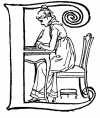 LIZABETH was sitting by herself the next morning, and writing to Jane,
while Mrs. Collins and Maria were gone on business into the village,
when she was startled by a ring at the door, the certain signal of a
visitor. As she had heard no carriage, she thought it not unlikely to be
Lady Catherine; and under that apprehension was putting away her
half-finished letter, that she might escape all impertinent questions,
when the door opened, and to her very great surprise Mr. Darcy, and Mr.
Darcy only, entered the room.
He seemed astonished too on finding her alone, and apologized for his intrusion, by letting her know that he had understood all the ladies to be within.
They then sat down, and when her inquiries after Rosings were made, seemed in danger of sinking into total silence. It was absolutely necessary, therefore, to think of something; and in this emergency recollecting when she had seen him last in Hertfordshire, and feeling curious to know what he would say on the subject of their hasty departure, she observed,—
“How very suddenly you all quitted Netherfield last November, Mr. Darcy! It must have been a most agreeable surprise to Mr. Bingley to see you all after him so soon; for, if I recollect right, he went but the day before. He and his sisters were well, I hope, when you left London?”
“Perfectly so, I thank you.”
She found that she was to receive no other answer; and, after a short pause, added,—
“I think I have understood that Mr. Bingley has not much idea of ever returning to Netherfield again?”
“I have never heard him say so; but it is probable that he may spend very little of his time there in future. He has many friends, and he is at a time of life when friends and engagements are continually increasing.”
“If he means to be but little at Netherfield, it would be better for the neighbourhood that he should give up the place entirely, for then we might possibly get a settled family there. But, perhaps, Mr. Bingley did not take the house so much for the convenience of the neighbourhood as for his own, and we must expect him to keep or quit it on the same principle.”
“I should not be surprised,” said Darcy, “if he were to give it up as soon as any eligible purchase offers.”
Elizabeth made no answer. She was afraid of talking longer of his friend; and, having nothing else to say, was now determined to leave the trouble of finding a subject to him.
He took the hint and soon began with, “This seems a very comfortable house. Lady Catherine, I believe, did a great deal to it when Mr. Collins first came to Hunsford.”
“I believe she did—and I am sure she could not have bestowed her kindness on a more grateful object.”
“Mr. Collins appears very fortunate in his choice of a wife.”
“Yes, indeed; his friends may well rejoice in his having met with one of the very few sensible women who would have accepted him, or have made him happy if they had. My friend has an excellent understanding—though I am not certain that I consider her marrying Mr. Collins as the wisest thing she ever did. She seems perfectly happy, however; and, in a prudential light, it is certainly a very good match for her.”
“It must be very agreeable to her to be settled within so easy a distance of her own family and friends.”
“An easy distance do you call it? It is nearly fifty miles.”
“And what is fifty miles of good road? Little more than half a day’s journey. Yes, I call it a very easy distance.”
“I should never have considered the distance as one of the advantages of the match,” cried Elizabeth. “I should never have said Mrs. Collins was settled near her family.”
“It is a proof of your own attachment to Hertfordshire. Anything beyond the very neighbourhood of Longbourn, I suppose, would appear far.”
As he spoke there was a sort of smile, which Elizabeth fancied she understood; he must be supposing her to be thinking of Jane and Netherfield, and she blushed as she answered,—
“I do not mean to say that a woman may not be settled too near her family. The far and the near must be relative, and depend on many varying circumstances. Where there is fortune to make the expense of travelling unimportant, distance becomes no evil. But that is not the case here. Mr. and Mrs. Collins have a comfortable income, but not such a one as will allow of frequent journeys—and I am persuaded my friend would not call herself near her family under less than half the present distance.”
Mr. Darcy drew his chair a little towards her, and said, “You cannot have a right to such very strong local attachment. You cannot have been always at Longbourn.”
Elizabeth looked surprised. The gentleman experienced some change of feeling; he drew back his chair, took a newspaper from the table, and, glancing over it, said, in a colder voice,—
“Are you pleased with Kent?”
A short dialogue on the subject of the country ensued, on either side calm and concise—and soon put an end to by the entrance of Charlotte and her sister, just returned from their walk. The tête-à-tête surprised them. Mr. Darcy related the mistake which had occasioned his intruding on Miss Bennet, and, after sitting a few minutes longer, without saying much to anybody, went away.
“Accompanied by their aunt”
[Copyright 1894 by George Allen.]
“What can be the meaning of this?” said Charlotte, as soon as he was gone. “My dear Eliza, he must be in love with you, or he would never have called on us in this familiar way.”
But when Elizabeth told of his silence, it did not seem very likely, even to Charlotte’s wishes, to be the case; and, after various conjectures, they could at last only suppose his visit to proceed from the difficulty of finding anything to do, which was the more probable from the time of year. All field sports were over. Within doors there was Lady Catherine, books, and a billiard table, but gentlemen cannot be always within doors; and in the nearness of the Parsonage, or the pleasantness of the walk to it, or of the people who lived in it, the two cousins found a temptation from this period of walking thither almost every day. They called at various times of the morning, sometimes separately, sometimes together, and now and then accompanied by their aunt. It was plain to them all that Colonel Fitzwilliam came because he had pleasure in their society, a persuasion which of course recommended him still more; and Elizabeth was reminded by her own satisfaction in being with him, as well as by his evident admiration, of her former favourite, George Wickham; and though, in comparing them, she saw there was less captivating softness in Colonel Fitzwilliam’s manners, she believed he might have the best informed mind.
But why Mr. Darcy came so often to the Parsonage it was more difficult to understand. It could not be for society, as he frequently sat there ten minutes together without opening his lips; and when he did speak, it seemed the effect of necessity rather than of choice—a sacrifice to propriety, not a pleasure to himself. He seldom appeared really animated. Mrs. Collins knew not what to make of him. Colonel Fitzwilliam’s occasionally laughing at his stupidity proved that he was generally different, which her own knowledge of him could not have told her; and as she would have liked to believe this change the effect of love, and the object of that love her friend Eliza, she set herself seriously to work to find it out: she watched him whenever they were at Rosings, and whenever he came to Hunsford; but without much success. He certainly looked at her friend a great deal, but the expression of that look was disputable. It was an earnest, steadfast gaze, but she often doubted whether there were much admiration in it, and sometimes it seemed nothing but absence of mind.
She had once or twice suggested to Elizabeth the possibility of his being partial to her, but Elizabeth always laughed at the idea; and Mrs. Collins did not think it right to press the subject, from the danger of raising expectations which might only end in disappointment; for in her opinion it admitted not of a doubt, that all her friend’s dislike would vanish, if she could suppose him to be in her power.
In her kind schemes for Elizabeth, she sometimes planned her marrying Colonel Fitzwilliam. He was, beyond comparison, the pleasantest man: he certainly admired her, and his situation in life was most eligible; but, to counterbalance these advantages, Mr. Darcy had considerable patronage in the church, and his cousin could have none at all.
中文翻译(全文)
第二天早上,伊丽莎白独自坐着给简写信,柯林斯太太和玛丽亚有事到村里去了。忽然门铃一响,把她吓了一跳——那准是有客上门了。她先前没听见马车声,心想来人多半是凯瑟琳夫人;这么一想,便忙着把写到一半的信收起来,好躲过那些刨根问底的盘问。这时门开了,进来的竟是达西先生,而且只有达西先生一个人,真叫她大吃一惊。
达西见她独自在家,似乎也很诧异;他为自己的唐突道歉,说他原以为几位女士都在屋里。
两人于是坐下。她问了几句罗新斯的情形,随后眼看就要陷进彻底的沉默里去。这样可不成,总得找点话说;她忽然想起上回在赫特福德郡见到他的情景,又很想知道他对他们当初匆匆离去会说些什么,便开口道——
“达西先生,去年十一月你们离开尼日斐花园,走得可真突然啊!宾利先生那么快就看见你们随后赶来,一定又惊又喜;要是我没记错,他不过早一天动身罢了。你们离开伦敦的时候,他和他的姐妹们身体都好吧?”
“都好极了,谢谢你。”
她发觉再问也问不出别的话来,停了一会儿,又添上一句——
“我好像听说过,宾利先生并不怎么打算再回尼日斐花园了?”
“我从没听他说过这样的话;不过,他以后恐怕很少会在那儿住了。他朋友很多,又正处在交游与应酬与日俱增的年纪。”
“他要是只想在尼日斐花园小住,那还不如索性把宅子退掉,对四邻倒还好些,说不定能换一户长住的人家来。不过,也许宾利先生当初租下这宅子,图的本是自己的方便,并非为了四邻;那么他保留还是退租,我们也只好照这个道理去揣度了。”
“我倒不会觉得奇怪,”达西说,“只要有一处合适的产业出售,他马上就会退掉。”
伊丽莎白没有作声。她怕再谈下去又要说到他的朋友;此外也无话可说,便打定主意,把找话题的苦差事留给他去担当。
他领会了她的意思,不久便开口道:“这房子看起来很舒服。我想,柯林斯先生初到汉斯福德的时候,凯瑟琳夫人替它添置了不少东西。”
“我想是这样——我相信她这番好意,再也找不到比柯林斯先生更知感激的人了。”
“柯林斯先生选妻子,似乎很有福气。”
“是啊,的确如此。他能遇上这样一位明白事理的女子,实在难得——肯嫁他的明白女子本来就少,即便肯嫁,能让他幸福的也少;他的亲友自然该为此高兴。我这位朋友见识极好——只是她嫁给柯林斯先生,我可不敢说是她做过的最聪明的事。不过她看上去十分快活;而且从稳妥的角度看,这门亲事对她自然是再好不过了。”
“她能安家在离娘家亲友这么近便的地方,一定觉得很惬意。”
“你说近便?差不多有五十英里呢。”
“五十英里的好路又算得了什么?不过半天路程罢了。是啊,我说这就叫十分近便。”
“我绝不会把距离算作这门亲事的好处之一,”伊丽莎白大声说,“我也绝不会说柯林斯太太是安家在娘家附近的。”
“这正说明你自己对赫特福德郡何等眷恋。我看,凡是出了朗伯恩左近的地方,你都会觉得远。”
他说这话时带着一种笑意,伊丽莎白自以为懂得其中的意思:他一定以为她想到了简和尼日斐花园。她红着脸答道——
“我并不是说,一个女人安家就不能离娘家太近。远近本来就是相对的,要看种种不同的情形。要是有钱,旅费不在话下,路远也就不算什么了。可这里的情形并非如此。柯林斯先生和太太收入宽裕,却还不足以时常往返——我敢说,除非路程缩到不及现在的一半,我这位朋友是不会认为自己离娘家近的。”
达西先生把椅子朝她挪近了一点,说道:“你不该有这么强烈的乡土眷恋吧。你总不会一直住在朗伯恩。”
伊丽莎白露出惊讶的神色。这位先生的心情似乎起了变化;他把椅子又挪了回去,从桌上拿起一张报纸,一面浏览,一面用冷淡些的声调说——
“你喜欢肯特吗?”
接着两人就这地方的风物简短地谈了几句,双方都平静而简洁——不多久,夏洛特和她妹妹散步回来,走进屋来,话便断了。她们见两人单独相对,颇感意外。达西先生说明了怎样弄错、以致打扰了班纳特小姐,又坐了几分钟,没同谁多说什么,便告辞走了。
“由姑母陪同”
[版权所有 1894 年,乔治·艾伦。]
“这是什么意思呢?”达西一走,夏洛特便说。“亲爱的伊丽莎,他一定是爱上你了,不然绝不会这样不拘礼节地上门来看我们。”
可是伊丽莎白把他方才的沉默寡言一说,即便按夏洛特的愿望来想,事情也不大像;两人揣测了种种可能,末了只能认为他这次来访是因为实在无事可做——看这季节,倒更显得可信。田猎都已结束。屋子里有凯瑟琳夫人、书和一张台球桌,可绅士总不能老待在屋里;于是,或是牧师住宅近便,或是那条小路走起来愉快,或是住在里面的人可亲,两位表兄弟从此几乎天天往那儿走。他们来的时间早晚不一,有时单独来,有时一道来,偶尔还有姑母陪着。大家都看得明白,菲茨威廉上校来是因为喜欢同她们相处——这个看法自然更叫他得人好感;伊丽莎白呢,既因为自己也乐意与他相处,又因为他显然倾慕自己,便想起了从前中意的那个人乔治·威克姆;虽然两相比较,她觉得菲茨威廉上校的举止少了些动人的温柔,却相信他的见识大概更为渊博。
可是达西先生为什么也这样常到牧师住宅来,就更叫人想不明白了。说是为了找人作伴吧,他常常一坐十分钟不开口;即使开口,也像是迫于不得已,并非出于自愿——是顾全体面的牺牲,不是自得其乐。他难得显得真正有兴致。柯林斯太太摸不透他。菲茨威廉上校偶尔笑他呆笨,可见他平日并不是这个样子——这一点,柯林斯太太凭自己对达西的了解是看不出来的;她倒愿意相信这种变化是爱情使然,而那爱情的对象就是她的朋友伊丽莎。于是她认真地留心起来:他们在罗新斯的时候她观察他,他到汉斯福德来的时候她也观察他,可并没有多少收获。他固然常看着她的朋友,但那目光含着什么意思,却难以断定。那是一种认真而专注的凝视,可她常常怀疑其中有多少倾慕,有时又觉得那不过是心不在焉罢了。
她曾有一两次向伊丽莎白暗示,说他也许对她有意,可伊丽莎白总是一笑置之;柯林斯太太觉得不该再往下说,怕的是撩起人家的期望,到头来只落得失望;因为依她看来,毫无疑问,只要她朋友相信自己能把他攥在手里,那份厌恶就会烟消云散。
她为伊丽莎白好,替她打算时,有时也想让她嫁给菲茨威廉上校。论讨人喜欢,谁也比不上上校:他确实倾慕她,他的身份地位也再合适不过;可抵消这些好处的是,达西先生在教会里有不小的荐举权,而他的表兄却一点也没有。
评论
0 条讨论
登录后发表评论
立即登录暂无评论
成为第一个分享想法的人吧!